See the move before you divide
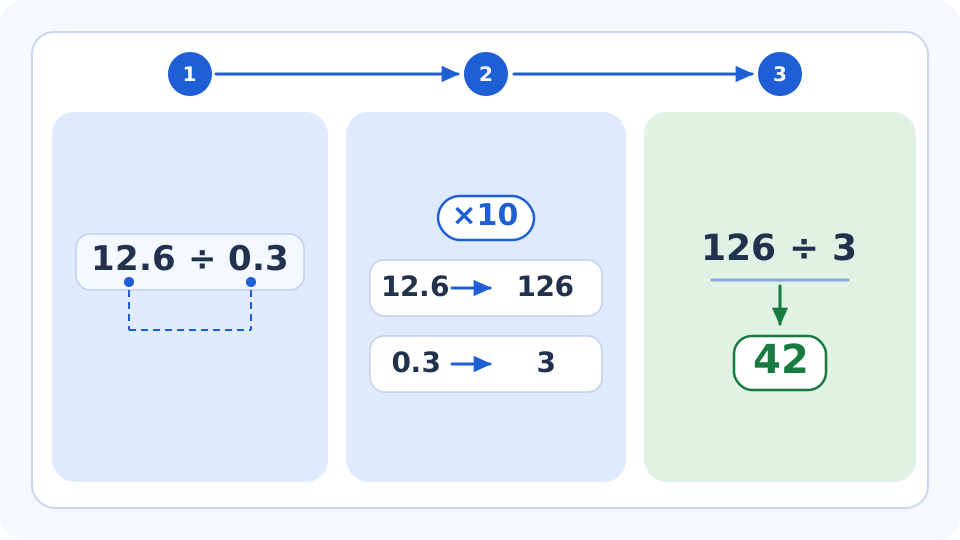
The key idea is that both decimal points move by the same amount before you divide.
What you will learn
- How to make the divisor a whole number first.
- Why both decimal points move the same number of places.
- How to continue with ordinary long division after that.
See it in 3 steps
- Move the decimal point in the divisor until the divisor becomes a whole number.
- Move the decimal point in the dividend the same number of places.
- Divide the transformed equation in the usual written way.
Try one example: 12.6 ÷ 0.3
- Move the decimal point in 0.3 one place to the right. It becomes 3.
- Move the decimal point in 12.6 one place to the right too. It becomes 126.
- Now divide 126 by 3. The answer is 42.
The reason for the same move is simple: both numbers change together, so the quotient stays the same.
Common mistakes
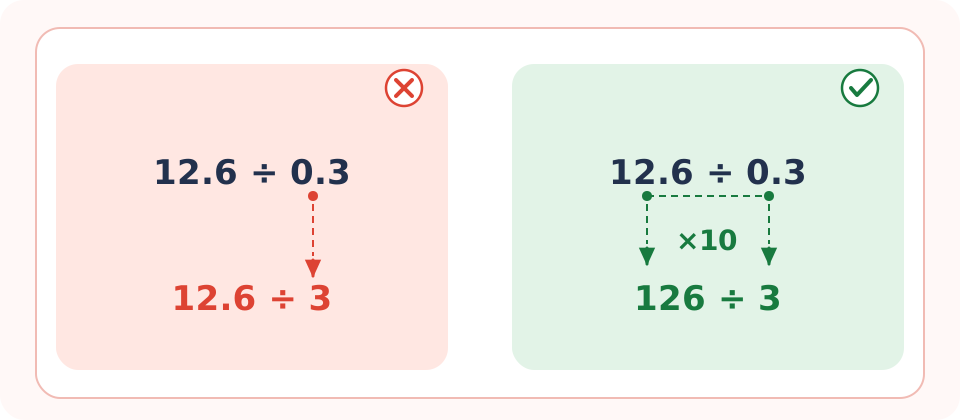
If only one side moves, you change the problem instead of making the same quotient easier to read.
- Moving the decimal point in the divisor only.
- Moving the two decimal points by different amounts.
- Losing track of where the decimal point belongs in the quotient.
Try it now
Where to go next
- Decimal Long DivisionOpen the full calculator when you want the move, the transformed equation, and the written steps together.
- Long Division CalculatorCompare this method with whole-number long division when no decimal-point move is needed.
- Decimal Long MultiplicationStay with decimals and compare moving the point before dividing with putting it back after multiplying.
Questions learners ask
Why do both decimal points move the same number of places?
Because multiplying both numbers by the same power of 10 does not change the quotient. It only makes the divisor easier to divide by.
What do I do after the decimal-point move?
After the divisor becomes a whole number, continue with ordinary long division on the transformed equation.
What if the divisor has one decimal place?
Move both decimal points one place to the right. Use the same number of moves for both numbers.
What should I do after this page?
Try the decimal division calculator with the same example first. Then compare it with whole-number long division or decimal multiplication.
See also
- Study & classroomWorksheets, graph paper, and classroom helpers.
- Math & statisticsBrowse the wider math collection.
- All topicsReturn to the main topics directory.