See the full flow first
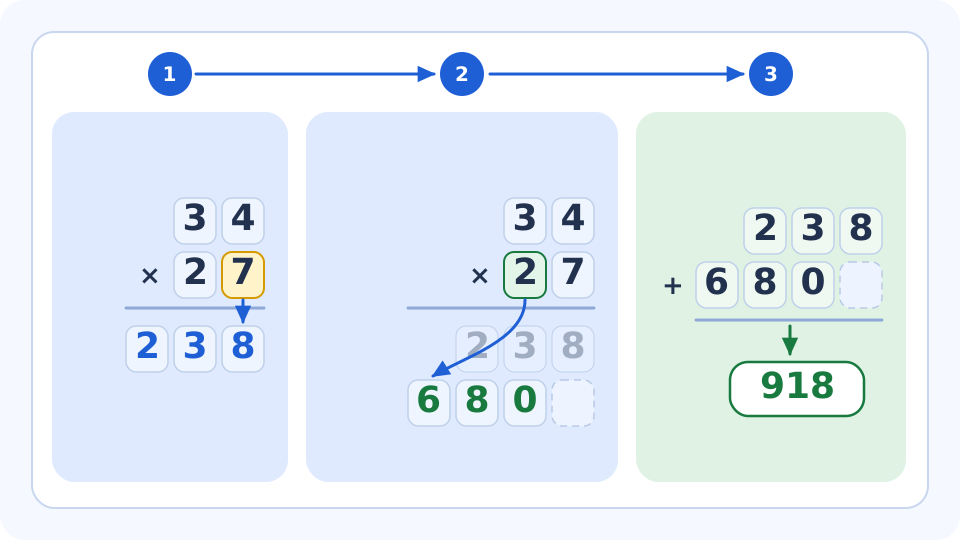
Before you read the steps, notice that only the tens row moves one place left.
What you will learn
- Where to start when you multiply two multi-digit numbers.
- Why the tens row starts one place farther left.
- How the finished rows become one final answer.
See it in 3 steps
- Multiply by the ones digit in the bottom number first.
- Then multiply by the tens digit and start that row one place to the left.
- Finally, add the rows together.
Try one example: 34 × 27
- Start with 7 in the ones place. Multiply 34 by 7 to make the first row.
- Then use 2 in the tens place. That row means 20, so it starts one place farther left.
- Add the two rows. That gives 918.
The left shift is not a trick. It shows that the second row stands for tens.
Common mistakes
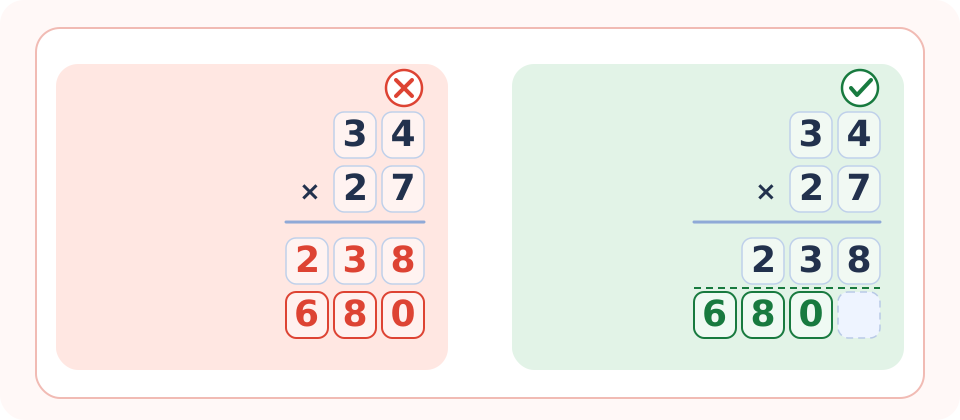
This is the mistake that makes the final answer look wrong even when each multiplication is correct.
- Starting the tens row in the ones column.
- Forgetting to add a carry into the next multiplication step.
- Adding the final rows with place values out of line.
Practice with the lesson beside you
Open the same examples in practice mode. You can use hints when you get stuck.
Where to go next
- Long Multiplication With StepsUse the full calculator when you want to move row by row with carries, guides, and teacher mode.
- Decimal Long MultiplicationStay with the same row logic and then add the step where the decimal point goes back.
- Column arithmetic learning hubReturn to the full series when you want to compare multiplication with other written methods.
Questions learners ask
Where do I start in long multiplication?
Start with the ones digit in the bottom number. Finish that row first, then move to the tens digit and start one place farther left.
Why does the tens row shift left?
Because that row stands for tens, not ones. Starting one place farther left keeps the place values lined up.
When do I add the rows together?
Add the rows only after you finish all the partial-product rows. That helps you separate multiplying from the final addition.
What should I do after this page?
Try the long multiplication calculator with the same example first. Then move to decimal multiplication when you are ready to put the decimal point back.
See also
- Study & classroomWorksheets, graph paper, and classroom helpers.
- Math & statisticsBrowse the wider math collection.
- All topicsReturn to the main topics directory.